Carlos—Manuel Rodríguez Patriotic Front
My Tender MatadorCarlos’s connection to the Manuel Rodríguez Patriotic Front turns the Queen of the Corner’s home from a refuge and stage set into clandestine infrastructure. He conceals the organization behind a university cover story, uses her house to store supplies and host meetings, and initially gives her only the information needed to help. When he finally tells her that Carlos is an alias and that he belongs to the Front, their relationship changes: she is no longer merely sheltering his comrades unknowingly, but is acknowledged as involved, though not fully informed.
Concealment and the House as Cover
Carlos first approaches the Queen of the Corner as a young university student asking her to store boxes he describes as censored books. She is captivated by his manner and does not question the story. As more boxes arrive, she incorporates them into the house, arranging them as bedside tables and improvised furniture, their decorative coverings concealing the contents. Her radio, which she calls her only companion, sits among the boxes, placing ordinary domestic life alongside the hidden operation.
Carlos asks permission for friends to meet at the house, presenting them as students without a place to study. The meetings take place at midnight or dawn, sometimes during rain, while a lookout remains outside. At first, the Queen serves coffee and assumes the visitors are respectable. When she tries to join them or offer refreshments, Carlos stops her, explaining that the men do not want to be disturbed. He sometimes keeps the meetings from her and says that even he cannot attend certain gatherings. His politeness and reassurances preserve her cooperation while maintaining a boundary around the group’s work.
The contrast between the Queen’s lively home and the visitors’ secrecy is part of the cover. Her music, elaborate furnishings, and conversations with her queer friends continue around the comings and goings of Carlos’s associates. Neighbors notice the procession of men and the boxes, and gossip about both, but the domestic appearance gives the clandestine activity a place within the ordinary rhythms of the block. The book later identifies the house as a warm, safe refuge for the Front.
From Shelter to Courier
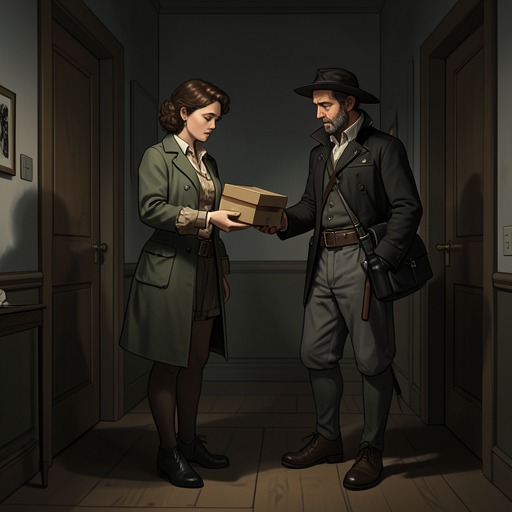
The Front’s activity reaches beyond the house when Carlos asks the Queen to deliver a heavy package downtown. He gives her an address on the second block of Paseo Ahumada and tells her to find a mustached man outside a store. He insists that she memorize the instructions rather than write them down, and describes the delivery as delicate and confidential. She accepts without asking what the package contains, reasoning that the request expresses Carlos’s trust in her discretion.
The delivery takes place amid tear gas and a street demonstration. When the package is left behind on a bus, the Queen turns back through the confusion to retrieve it, afraid that Carlos will hold her responsible for losing it. She then continues through the crowd and encounters a police formation confronting demonstrators. Rather than flee, she adopts the posture of an ordinary woman out shopping and gets past the officers with the heavy bag. At noon, she finds the man Carlos described and hands it over. The episode makes her assistance materially consequential: she carries out a clandestine errand in the middle of political unrest, although she still does not know the organization’s name or the package’s contents.
Her political awareness grows alongside these favors. The neighborhood hears demonstrations, threats, and news bulletins from Radio Cooperativa; the Queen initially prefers old songs to the station’s alarming reports. After hearing testimony about families of detained and disappeared people, however, she becomes moved by their accounts and begins calling the regime a dictatorship rather than accepting the phrase military government. The widening awareness does not mean she has learned Carlos’s secrets: when friends question him, she deflects their inquiries, and the information she receives remains carefully limited.
Disclosure and the Limits of Trust
When Carlos returns to remove the remaining boxes and a metal cylinder, the Queen challenges the secrecy surrounding his activities. She reveals that she has found his identity card but has not read the name. Carlos admits that his name is not Carlos: it is an alias he uses for clandestine political work. He explains that a different name allows members to operate secretly, and prefers that she continue to know him as Carlos for security.
The disclosure answers the question of whether she and Carlos are connected to the same cause. She asks whether both are involved, and he confirms that they are. He also acknowledges that, after all the help she has given, it is unfair for her to know nothing. Yet he does not open the operation to her: he says it would be dangerous for her to have access to more information and offers only what he considers safe to tell. Their new closeness therefore rests on a carefully defined imbalance—recognition of her involvement, without full operational knowledge.
Carlos proposes that they use a code phrase if they ever need to communicate clandestinely. The Queen wants it to be the title of a song, fitting her habit of turning songs and performance into the language of her feelings. Carlos forbids writing it down and says it must be memorized; he whispers the phrase to her. The exchange gives their shared political connection a private sign, but its secrecy also underlines that their cooperation remains bounded by the risks of the Front’s work.
Repression and the Relationship’s Consequence
After the September 1986 attack on Augusto Pinochet’s motorcade, Santiago is subjected to military lockdown, house-to-house searches, roadblocks, and arrests. The Queen returns home carrying a picture of a disappeared person and fears that soldiers may connect her house with the boxes and the young men who met there. She worries that Carlos may have nowhere to hide, while also imagining that the neighbors could expose the house. The Front’s refuge has become a source of danger to the person who provided it.
During the searches, she keeps a kettle ready in case Carlos or his friends arrive and leaves the radio on low for news. A call from Laura, one of Carlos’s associates, tells her that Carlos is safe and that they need to meet. The contact confirms that she remains part of the network’s circle, but the tightening repression makes staying in her home untenable. At dawn she burns papers bearing addresses and telephone numbers, cleans surfaces, and packs her possessions into two bags before leaving for La Rana’s home. The relationship with the Front has thus moved from an apparently harmless favor to shelter, delivery, acknowledged clandestine involvement, and finally flight under threat. Carlos’s cause gives the Queen a role in political resistance, while the secrecy that protects the operation also leaves her exposed to its consequences.